


Page 26 - Griffin Gazette - July 2025
P. 26
TINY THREAT,

BIG IMPACT:

Battling Pepper Thrips in Greenhouse Production

By: Tanner Bailey, GGSPro Technical Specialist & George Grant, Ph.D.,
GGSPro Technical Services Manager, Griffin Greenhouse Supplies Inc.

An invasive thrips species, Thrips parvispinus, commonly known as the Pepper Thrips, is quickly emerging as the new kid on the
block for greenhouse and nursery pests in North America. Over the past two years, the number of reported cases has been sky
rocketing – this is the time to review what we currently know about this challenging pest and provide proactive strategies growers
can implement immediately. First intercepted in the U.S. in Hawaii, it is now widespread within Florida, a hub for growing and
shipping susceptible ornamental material across the country. This article will outline valuable information available on the known
host range of plant material Pepper Thrips prioritize, scouting tips for early identification, and what chemical strategies have been
evaluated for combatting this challenging pest.

Scouting & Identification
Because T. parvispinus is new to North America, the list of host plant species is changing rapidly with some key ornamental and
vegetable crops have been documented as shown in the table below. University of Florida, who is leading the charge in Pepper
Thrips research, now lists over 40 susceptible crops.

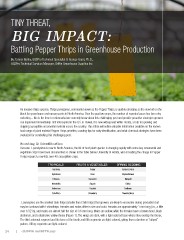
TROPICALS       FRUITS & VEGETABLES       SPRING BEDDING
     Gardenia                   Pepper          Gerbera Daisy
    Dipladenia                   Bean           Chrysanthemum
     Hibiscus                  Cucumber            Marigold
    Mandevilla                  Squash               Dahlia
    Anthurium                  Zucchini            Sunflower
    Schefflera                                  Flowering Vinca
                              Strawberry

             T. parvispinus are the smallest dark thrips (smaller than Chilli Thrips) that growers are likely to encounter during production but
             may be confused with Echinothrips. Females and males differ in size and color. Females are approximately 1 mm long (i.e., a little
             over 1/32 in), and males are almost half the size at 0.6 mm long. Males are yellow, while the females have a brown head, black
             abdomen, and a distinctive yellow thorax (Figure 1). The wings are dark, with a light-colored base where they overlap the thorax.
             The third antennal segment and the base of the fourth and fifth segments are light-colored, giving them a broken or “striped”
             pattern. All leg segments are light-colored.

2 6 | GRIFFIN GAZETTE 2025

