


Page 18 - Griffin Gazette Fall 2016
P. 18
Alkalinity Control

                       with Acid Injection

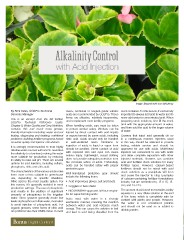
                                                                                               Image: Begonia with iron deficiency

By Rick Yates, GGSPro Technical                  cases, technical or reagent-grade sulfuric    stock container. For this reason, it’s extremely
Services Manager                                 acids are recommended by GGSPro. These        important to always add acid to water and to
                                                 forms are effective, relatively inexpensive,  never add water to concentrated acid. When
This is an excerpt from the 4th Edition          and complement most fertility programs.       preparing stock solutions, first fill the stock
GGSPro Technical Reference Guide.                                                              tank with the appropriate amount of water,
Chapter 8, Water Quality and Crop Nutrition,     When handling acids, care must be taken       and then add the acid to the larger volume
contains this and much more grower-              to protect worker safety. Workers can be      of water.
friendly information including: water and soil   injured by direct contact with acid liquids
testing, diagnosing and treating; nutritional    or vapors formed by some acids, including     Growers that inject acid generally do so
problems; building fertilizer programs based     nitric acid. Acids should only be handled     in a continuous manner. Injectors used
on water quality and injector calculations.      in well-ventilated areas. Inhalation or       in this way should be selected to provide
                                                 ingestion of acids in liquid or vapor form    lasting, reliable service and should be
It is strongly recommended to treat highly       should be avoided. Direct contact of acid     approved for use with acids. Multi-head
alkaline water sources with acid to neutralize   with exposed skin and eyes can cause          injectors are convenient to use with acids
the alkalinity to a low level, making the water  serious injury. Lightweight, casual clothing  and allow complete separation with other
more suitable for production by reducing         does not provide adequate protection form     injected materials. Growers can combine
its ability to raise soil pH. There are several  the corrosive action of acids. Fortunately,   acid and fertilizer stock solutions for many
options for acid injection, including sulfuric,  acids can be handled safely with proper       fertilizer types. However, calcium-based
phosphoric, nitric and citric acid.              protective gear.                              fertilizers should not be mixed with acid
                                                                                               stock solutions as a precipitate will form
The characteristics of the various acids make    Well-maintained protective gear should        and cause the injector to clog. Examples
them more or less suitable for greenhouse        include the following items:                  of calcium-containing fertilizer formulations
use, depending on specific situations.                                                         include, but are not limited to, 15-0-15, 15-
Nitric acid is the most caustic option. For      •	 Acid-impervious gloves, suit and boots     0-0, and 13-2-13.
this reason, it’s generally avoided in most
production settings. The use of phosphoric       •	 Goggles or face shield                     The amount of acid used to neutralize acidity
acid results in the addition of significant                                                    equates to a very dilute solution at the end
amounts of phosphorus to the irrigation          •	 NIOSH/MSHA-approved full-face respira-     of the hose, which is completely safe for
water. Since growers generally desire low        tor for vapor-forming acids                   contact with plants and people. However,
levels of phosphorus in their water, most elect                                                this water is not considered potable
to avoid injection of phosphoric acid. For       Acids react with water in a strongly          and should not be used as or added to
organic growers, some forms of citric acid       exothermic manner, meaning the reaction       drinking water.
are preferred due their OMRI status. In most     between water and acid releases much
                                                 energy. This can cause the solution to boil
                                                 and lead to acid being dispelled from the

Bonus Digital Content

