


Page 40 - Griffin Gazette - July 2025
P. 40
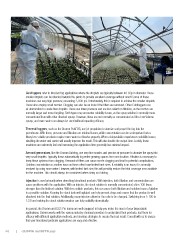
Coldfoggers refer to directed fog applications where the droplets are typically between 40-60µ in diameter. These
                  smaller droplets can be directed towards the plants to provide excellent coverage without runoff. Some of these
                  machines use very high pressure, exceeding 3,000 psi. Unfortunately, this is required to achieve the smaller droplets.
                  These also employ small nozzles. Clogging can also be an issue if the filters are removed. Other Coldfoggers use
                  air atomization to create finer droplets. These use lower pressure and are less reliant on filtration, as the nozzles are
                  normally larger and more forgiving. Both types may encounter solubility issues, as the spray solution is normally more
                  concentrated than with other directed sprays. However, these are not normally as concentrated as Ultra Low Volume
                  sprays, and more water can always be used without impacting efficacy.

                  Thermal foggers, such as the Dramm PulsFOG, use jet-propulsion to atomize and propel the fog into the
                  greenhouse. With these, pressure and filtration are minimal issues, while concentration can be an important factor.
                  Many less soluble products require more water to dissolve properly. When a biopesticide experiences solubility issues,
                  doubling the water and carrier will usually improve the result. This will also double the output time. Luckily, these
                  machines are extremely fast and increasing the application time generally has minimal impact.

                  Aerosol generators, like the Dramm Autofog, use very fine nozzles and precise air pressure to atomize the spray into
                  very small droplets. Typically, these automatically fog entire growing spaces from one location. Filtration is necessary to
                  keep these systems from clogging. Removal of filters can cause nozzle clogging and lead to potential complications.
                  Solution concentration is another issue as these often have limited tank sizes. If solubility is an issue, it is normally
                  resolved by using more water. However, with limited tank size, this will possibly reduce the total coverage area available
                  for the machine. This should always be considered when sizing an Autofog.

                  Injection is used primarily when drenching biorational products. With injection, both filtration and concentration can
                  cause problems with the application. With an injector, the stock solution is normally concentrated, often 100 times
                  stronger than the finished solution. With less soluble products, this can cause both filtration and solution issues. Agitation
                  is a possible solution. Keeping the stock tank well agitated can help prevent clogs and ensure that the product is well
                  dissolved into the final solution. Additionally, many injectors allow for the ratio to be changed. Switching from 1:100 to
                  1:50 and making the stock solution weaker can help solubility dramatically.

                  In general, the Dramm and GGS Pro teams are well equipped to help you make the most of your biopesticide
                  applications. Dramm works with the various industry chemical providers to understand their products, test them for
                  efficacy with different application methods, and develop strategies to ensure the best result. Consult with us to ensure
                  that your biorational pesticide applications are easy and effective.

4 0 | GRIFFIN GAZETTE 2025

