When Ca deficiency occurs, it is important to treat the deficiency as quickly as possible to avoid any potential losses in yield. Calcium Chloride (CaCl) is a helpful resource for quickly alleviating Ca deficiency. Most commonly used on Poinsettias and Cannabis, CaCl is also an effective tool for treating tip burn caused by Ca deficiency in leafy greens. CaCl is the most efficient option to quickly add Ca to a crop’s nutrition plan as it delivers 27% calcium compared to 18% calcium from calcium nitrate.
Calcium is an immobile element in plant tissues which is why the deficiency symptoms typically occur in the actively growing sections of the plant first. As plants take up water, the Ca moves with the water through the tissues. This is why Ca deficiency can occur in areas where there is very little water movement, causing tip burn in lettuce where the tissue is very tightly packed and airflow is minimal. Ideally, growers would increase airflow and lower humidity to encourage Ca movement through tissues and avoid tip burn. However, keeping the environment ideal for Ca movement can be difficult. CaCl applications can help to alleviate the stress placed on plants by environmental conditions and deliver the Ca they need directly to the tissues where it is needed most.
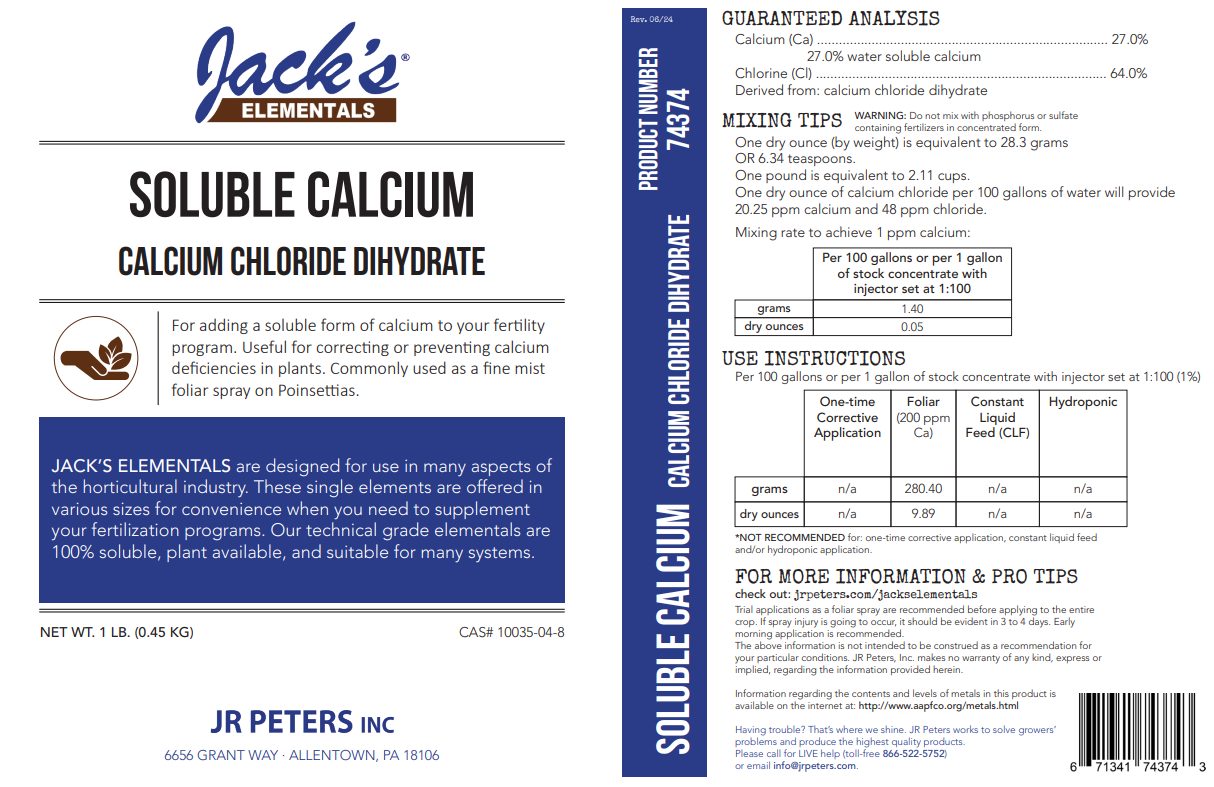
Foliar calcium chloride applications also allows growers to correct calcium deficiency without altering their standard nitrogen program, while also avoiding excess chloride accumulation in the root zone. For example, a solution made from Calcium Chloride containing 200ppm Ca also delivers 474ppm Cl and can be damaging if applied directly to the rootzone. Chloride levels exceeding 100ppm in solution can inhibit root growth and cause severe necrotic symptoms. Lettuce is a very salt sensitive crop and would benefit more from a foliar application of Ca rather than adjustments being made to the nutrient solution.
CaCl should be applied as a foliar spray at the first sign of Ca deficiency. Applying a foliar spray is the fastest way to get Ca directly to the parts of the plant where it is needed the most, even if Ca is already present in your regular CLF. Lettuce and other leafy greens can be very sensitive to high salts in the rootzone, but can tolerate high salt levels in a foliar spray. Studies show that an optimal foliar application rate would be around 400ppm Ca to alleviate Ca deficiency symptoms, improve harvest weight, and increase shelf life of harvested plants. This rate can be achieved by mixing 560.8g of Jack’s CaCl per 100 gallons of water. This spray can be applied up to 2X weekly as needed to reduce tip burn and improve overall crop health.
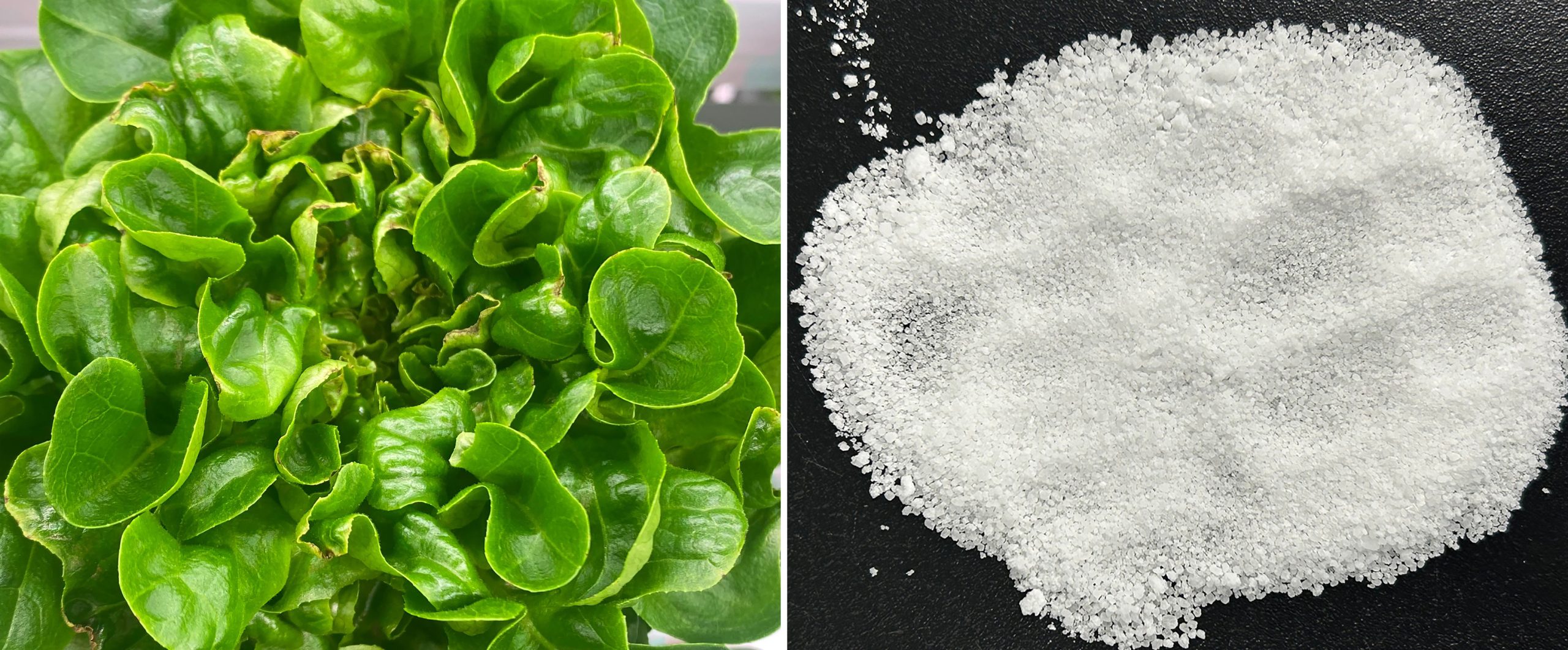
Left Image: Example of inner leaf tip burn in lettuce caused by Ca deficiency.
Right Image: Calcium Chloride Dihydrate.