“Biopesticides” are emerging as an important tool for greenhouse and nursery growers, and every spray rotation and integrated pest management program can benefit from their use. Biopesticides have short restricted entry intervals (REIs), little to no preharvest intervals (PHIs), and generally no limits to the number of applications on given crops or within a crop cycle. These benefits are due to their relative employee and consumer safety, as well as no documented cases of resistance in target pest populations. Moreover, using them as part of a spray rotation helps to prevent overuse and potential chemical resistance to conventional pesticides. Biopesticides are a class of pesticides where the active ingredient is one or more organisms or an organism’s byproduct, derived from fungi, bacteria, or plants. For that reason, they provide entirely different modes of action. These products come with a record of good plant safety, commonly have a wide variety of edible plants on their labels, and are commonly approved for organic production.
We are fortunate as an industry that there are many companies conducting research and introducing new biopesticide products regularly. The following is a review of several products that Griffin Greenhouse Supplies and its GGSPro Team are excited to see enter the market.
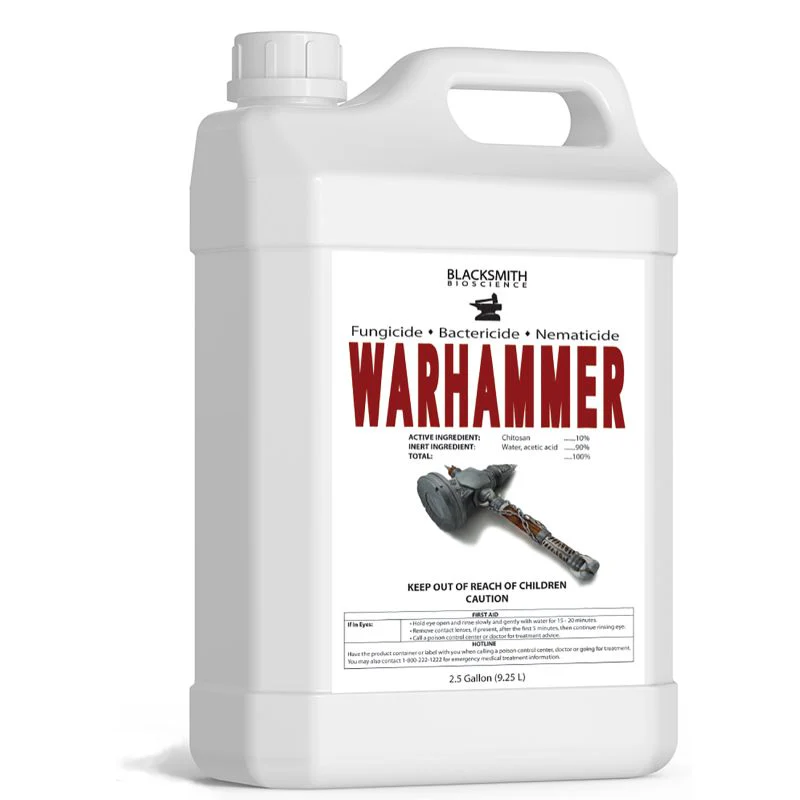
WarHammer from Blacksmith BioScience brings us an entirely new and versatile active ingredient. Chitosan is a natural substance derived from chitin, the biopolymer that forms the hard exoskeleton of crustaceans such as crabs and shrimps. WarHammer contains 10% chitosan, a natural plant defense elicitor, meaning that it triggers the plant’s immune system to fight against pathogens and stress. Diseases suppressed include Fusarium, Rhizoctonia, Pythium, Phytophthora, Sclerotinia, Verticillium, and other soil-borne pathogens. Above-ground disease suppression covers powdery mildew, downy mildew, Botrytis, Erwinia, fungal leaf spots, and interestingly, viruses as well such as tobacco mosaic virus. WarHammer is also labeled as a nematicide, adding to the short list of tools to combat common species such as root-knot and lesion nematodes. In addition, chitosan may enhance plant growth and productivity by improving the absorption of essential minerals, such as nitrogen, phosphorus, and potassium, and help plants cope with extreme temperatures, drought, and salinity by reducing water loss and increasing antioxidant activity. WarHammer is labeled for various crops, such as fruits, vegetables, grains, nuts, and herbs, and it can be applied as a soil drench, foliar spray, seed treatment, or by soil incorporation. OMRI certified, 0-hr REI, 0-day PHI.
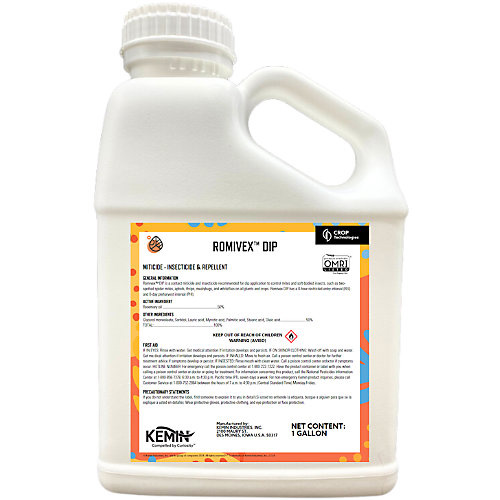
Romivex DIP from Kemin marks the return of the original formulation of popularly known TetraCURB for use as a dip and foliar spray for those propagators that relied on it as an important tool to ensure that new cuttings were clean before introducing them into their facilities. Romivex DIP is an insecticide and miticide specifically designed for dipping unrooted cuttings for all greenhouse and nursery plants to effectively control mites and small, soft-bodied insect infestations. The formulation includes an adjuvant, emulsifiers, and the powerful active ingredient. Rosemary oil features a unique compound profile that provides multiple modes of action: suffocation by blocking airways, desiccation of the exoskeleton, and paralysis. The active compounds derived from rosemary oil target the insect-specific octopamine receptor, leading to paralysis and eventual death of the insect. As a FIFRA 25(b) Exempt product, it is labeled for use on a broad range of edible and non-edible crops. OMRI certified, 0-hr REI, 0-day PHI.
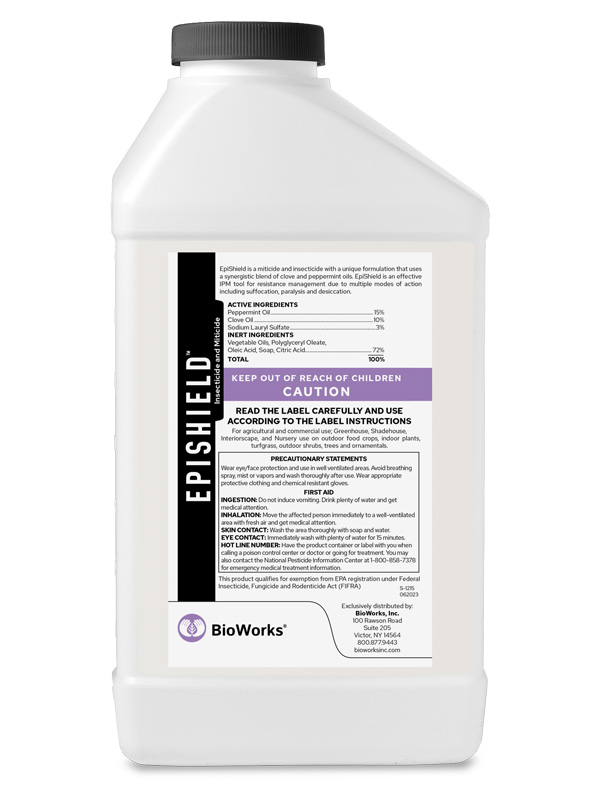
EpiShield O is another 25(b) Exempt product recently released by BioWorks. Now OMRI certified, EpiShield O is a miticide and insecticide based on a blend of essential oils and a surfactant, providing quick knockdown control of mites, aphids, thrips, whiteflies, and mealybugs. Active ingredients include peppermint oil and clove oil, bringing together multiple modes of action. EpiShield O provides lower oil content, reducing the potential for phytotoxicity, which can be seen with oil-based products. BioWorks is continuing to work with growers to determine crop-specific sensitivities to EpiShield, and a corresponding tolerance guide can be found on their website. Labeled for use in greenhouses, nurseries, landscape, or field, the product can be applied as a spray, drench, or plant dip on a broad range of edible and non-edible crops. OMRI certified, 0-hr REI, 0-day PHI.
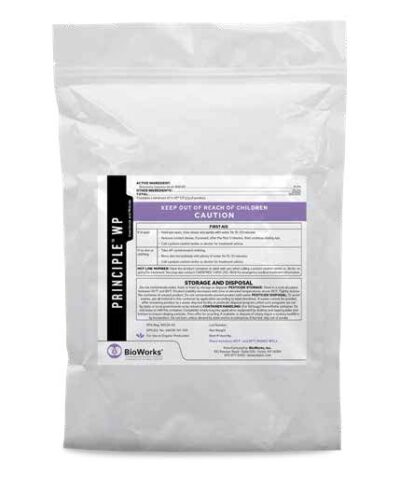
(Beauveria bassiana Strain BW149) |
||||
(Chitosan) |
(Rosemary Oil) |
(Peppermint Oil & Clove Oil) |
Note, not all products are registered in all states. Some pesticides are restricted-use in some states or regions and not others. It is the responsibility of the applicator to read and follow all label directions, remembering that labels may change. Other products may be safe and effective. Rates, application methods, and edible status are detailed in our GGSPro Insecticide & Fungicide Guides. Griffin also offers the 6th Edition GGSPro Technical Reference Guide. This valuable resource outlines a wide range of pest control options and information on pollinator safety, BCA’s, scouting, weed management, plant lighting, nutrition, water quality, and more!