Protecting the Crop You’ve Already Grown
For perennial growers across the Northeast, Midwest, and Central United States, winter can be one of the most challenging parts of the production cycle. By the time cold weather arrives, months of labor, inputs, and crop development are already invested in plants that still need to make it through winter before they can become a spring sale.
Successful overwintering is not simply about keeping perennials from freezing. The goal is to protect roots and crowns while maintaining dormancy and minimizing extreme changes in temperature and moisture. Container-grown perennials are particularly vulnerable because their root systems do not receive the same insulation they would in the ground. Roots growing along the bottom edge of a container may be separated from winter air temperatures by little more than the wall of the pot.
Start With a Strong Plant
Good overwintering begins long before the first hard freeze. Perennials need adequate time after transplanting to establish a healthy root system. In northern production areas, smaller plugs may need to be planted as early as July, while larger liners can often be planted later in the summer or early fall. The farther north the operation, the earlier this establishment needs to occur.
Fall fertility should support establishment without encouraging excessive late-season growth. This is also a good opportunity to evaluate whether a controlled-release fertilizer fits the production program. The objective is not to push soft top growth going into winter, but to enter dormancy with a well-established plant capable of responding when temperatures begin to rise in spring.
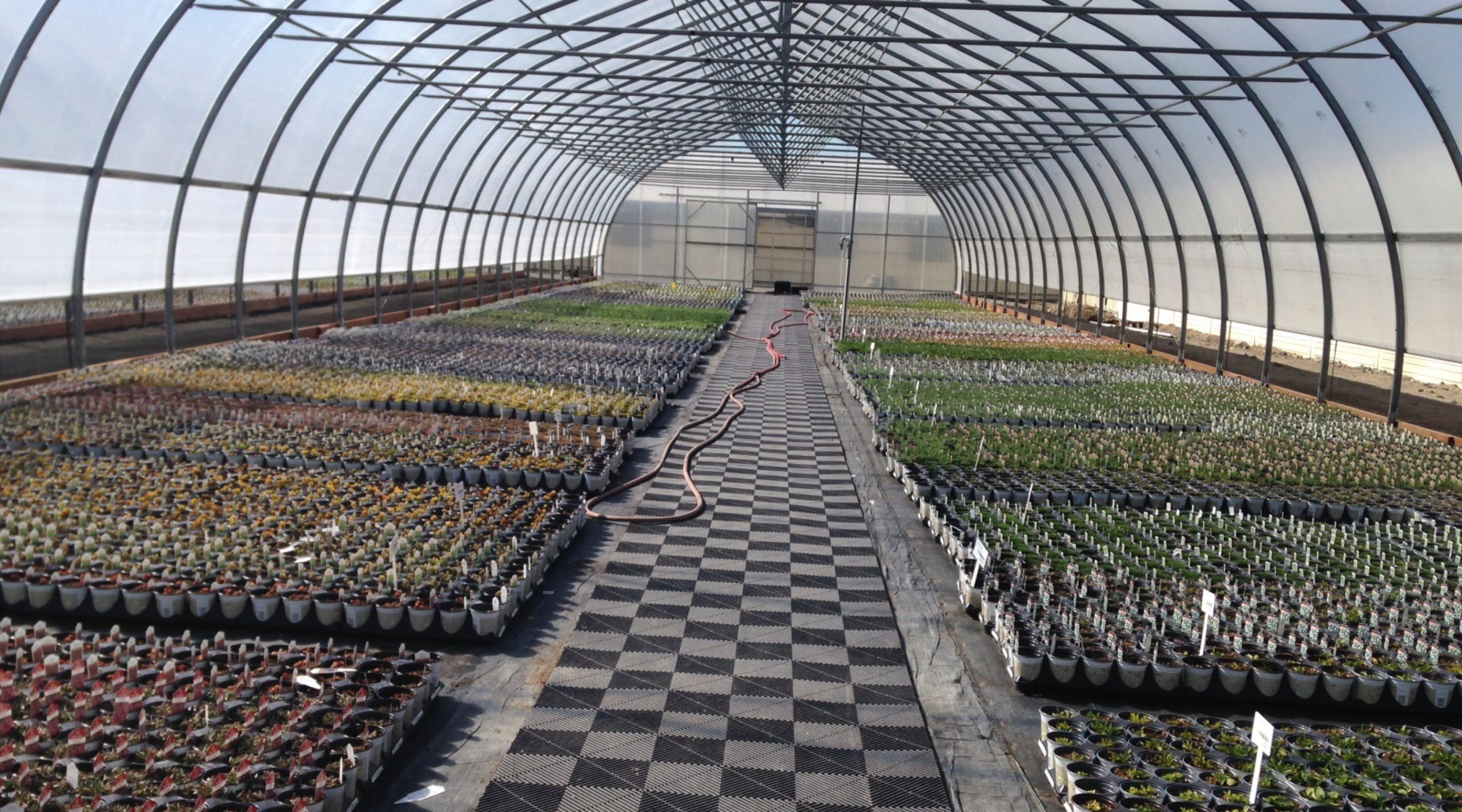
Perennials in an overwintering house
Protect the Crown and Root Zone
As top growth dies back, sanitation becomes increasingly important. Dead foliage and crop debris can hold moisture around crowns and provide an environment for disease development. Cleaning plants before covering them reduces the amount of potentially infected material going into a long period of cool, damp conditions.
Root and crown diseases deserve particular attention. Pythium, Phytophthora, Rhizoctonia, Fusarium, and other pathogens can become costly problems when cool temperatures, prolonged moisture, and stressed roots come together. A preventative fungicide program is key to success in the Spring. A preventative drench using a broad-spectrum fungicide should be applied 7-14 days prior to pruning. Contact GGSPro for information on rates and timing.
| Fungicides | Item # | MOA | Target Pathogen |
|---|---|---|---|
| 3336 EG 3336-F | 71‑2550 71‑2585 | 1 | Rhizoctonia, Thielaviopsis, Rhizoctonia Web Blight |
| Affirm | 71‑1131 | 19 | Rhizoctonia, Thielaviopsis, Botrytis, Rhizoctonia Web Blight |
| Banrot WP/G | 71‑1210 71‑1215 | 1 & 14 | Phytophthora, Pythium, Rhizoctonia, Thielaviopsis |
| Fenstop | 71‑14801 | 11 | Pythium, Phytophthora |
| Medallion WDG | 71‑16502 | 12 | Rhizoctonia, Thielaviopsis, Botrytis, Rhizoctonia Web Blight |
| Mural WG | 71‑1690 | 7 & 11 | Rhizoctonia, Thielaviopsis, Botrytis, Rhizoctonia Web Blight, Rust |
| Segway O | 71‑31102 | 21 | Pythium, Phytophthora |
| Subdue Maxx | 71‑2979 | 4 | Pythium, Phytophthora |
| Terrazole L | 71‑3025 | 14 | Pythium, Phytophthora |
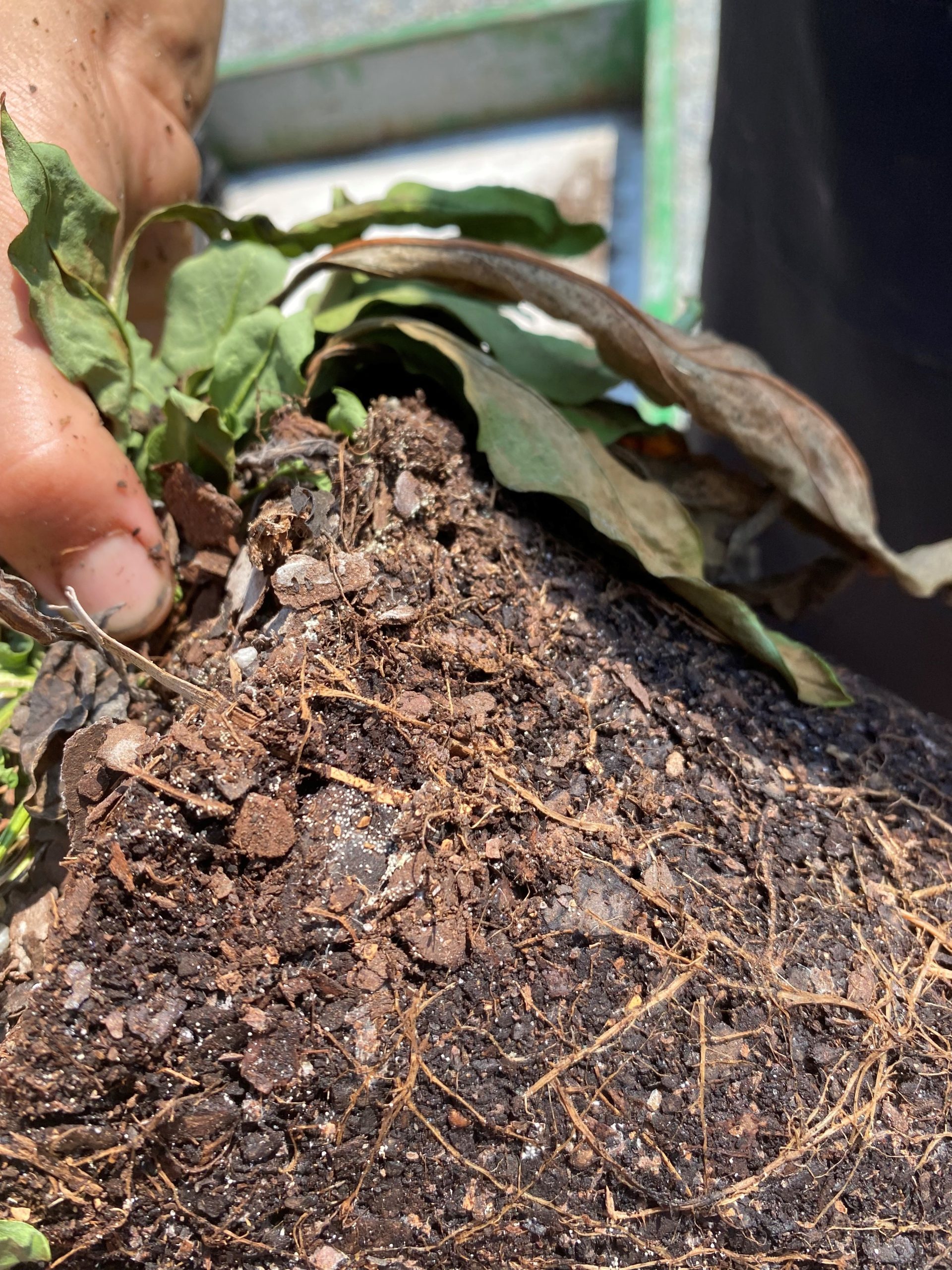
Penstemon with Pythium
Moisture management is equally important. Plants should not enter winter excessively dry, but continuously saturated media can create its own problems. Even during dormancy, growers should periodically check root-zone moisture rather than assuming covered plants will require no attention. Research-based production guidance recommends keeping media moist enough to avoid desiccation while avoiding overwatering that encourages root and crown disease.
Keep Them Cold, Not Warm
One of the most important concepts in perennial overwintering is that protection does not necessarily mean warmth.
The goal is temperature stability.
Perennials can be overwintered in unheated or minimally heated structures, under white poly, or outdoors beneath overwintering fabric or thermal blankets. These materials help moderate the environment around the container and protect root systems from extreme temperatures. The existing GGSPro overwintering recommendations also emphasize white poly and ventilation as tools for limiting daytime heat accumulation.
A general guideline is to cover crops 30 to 45 days after the first frost date, using the F+30 or F+45 method. For example, if the first frost date is October 15, the recommended covering dates would be November 15 or November 30.
A sunny January or February day can warm a covered crop surprisingly quickly. Plants that warm excessively may begin losing cold hardiness or breaking dormancy, only to experience damaging temperatures again that night.
For many containerized perennials, maintaining root-zone temperatures near freezing is preferable to repeated freeze-thaw cycles. General production guidance recommends approximately 30–34°F soil temperatures for many overwintered perennials and ventilation when temperatures remain above 40°F for several days.
That makes a soil thermometer and a good weather forecast surprisingly valuable overwintering tools.
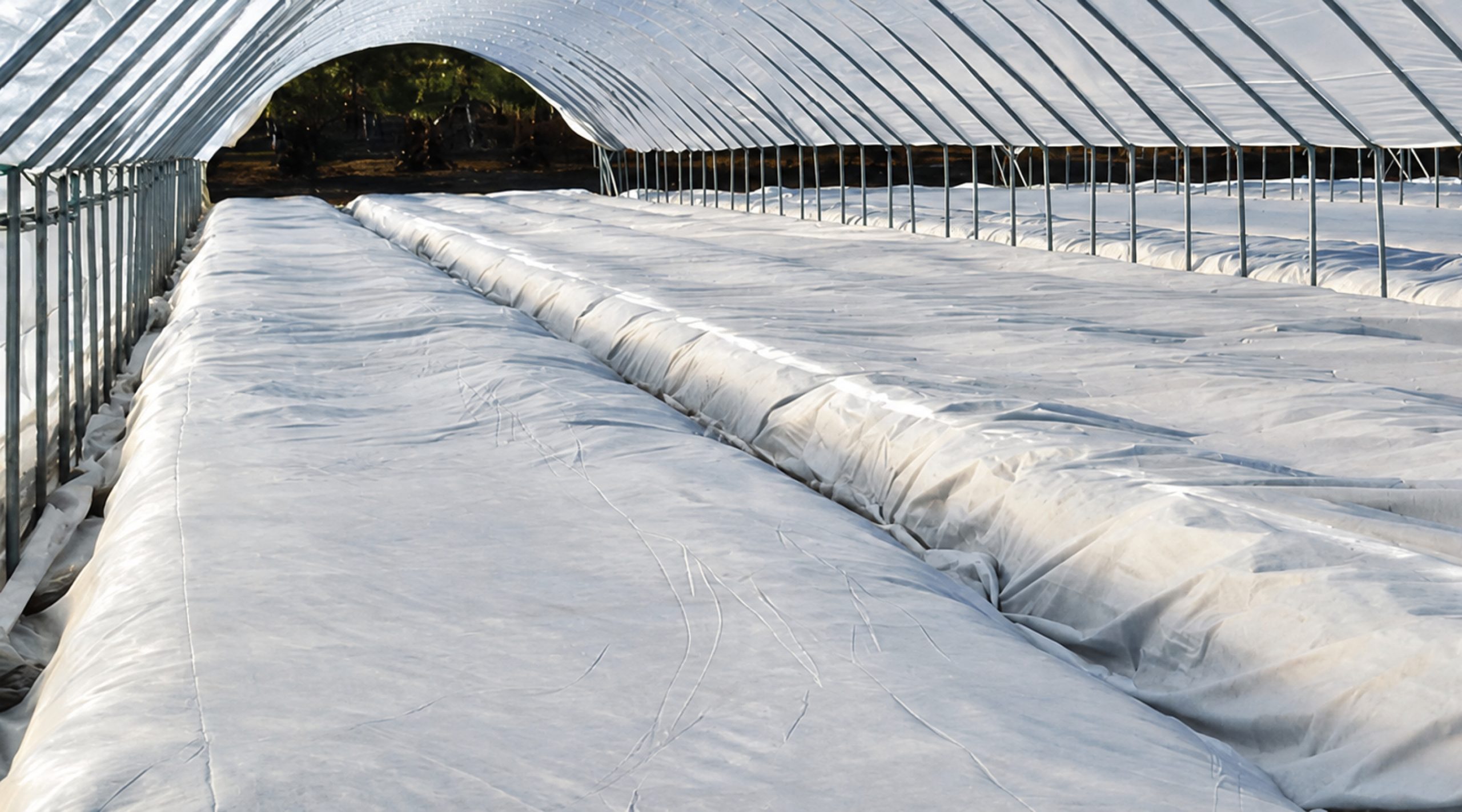
AgroFabric Overwintering Blanket
Griffin Greenhouse Supplies offers crop cover options from several manufacturers, including AgroFabric, L&M Supply and DuPont. Most winter protection fabrics are woven, allowing some water transmission to help prevent puddling and heavy condensation beneath the cover.
Lightweight fabric provides light frost protection and 85-95% light transmission. It is a good additional barrier under white poly in moderate climates, in minimum-temperature greenhouses, or for frost protection after plants have been removed from the cold frame.
Medium Weight fabrics provide moderate frost protection and limit light transmission to 60-70%. They are a popular choice for crop cover in high tunnels under white poly in colder environments.
Heavy Weight fabric provides optimum frost protection and ensures plant dormancy by reducing light transmission to as low as 25%. It is a good choice in most environments and can serve as stand-alone winter protection in moderate climates or be used under white poly in the coldest climates.
Contact your Griffin representative for recommendations based on their valuable local knowledge and experience in your area.
Don’t Cover It and Forget It
Winter protection requires management throughout the season. Thermal blankets may need to be removed or pulled back during extended warm periods and replaced when severe cold returns. Hoop houses and poly-covered structures need ventilation when sunny weather drives temperatures upward.
Rodents should also be considered before crops are covered. Protected perennial houses can provide an excellent winter environment for mice and other rodents. The existing GGSPro overwintering program recommends incorporating rodent management regardless of whether crops are protected under fabric or inside a hoop house.
The same principle applies as spring approaches. Do not rush to uncover the crop permanently after the first stretch of warm weather. Gradually increasing ventilation and removing protection allows plants to acclimate while keeping coverings available if another cold event develops.
Protect the Investment
There is no single overwintering program that fits every perennial, container size, or growing region. Crop hardiness, root development, moisture, winter protection, and local weather all influence the amount of protection required.
The common goal is much simpler: enter winter with a healthy, established crop, protect the root system from temperature extremes, manage moisture and disease pressure, and keep dormant plants dormant until spring truly arrives.
A little preparation in the fall and careful monitoring through winter can make the difference between opening a perennial house full of losses and uncovering a healthy crop ready for the spring market.
For help developing an overwintering program, selecting winter protection materials, or choosing plant health products for your perennial crops, contact the GGSPro team.