A truly “new” pesticide is very rare to find in ornamental production, which is why the launch of Vykenda™ insecticide/miticide has generated significant attention across the greenhouse and nursery industry. Vykenda introduces Isocycloseram, a new active ingredient built on Syngenta’s PLINAZOLIN® technology and classified as an IRAC Group 30 insecticide. This represents a completely new mode of action (MOA) for the ornamental market and provides growers with another rotation partner as resistance challenges continue to increase.
For growers managing thrips, mites, and chewing insects in high-pressure production systems, the addition of a new chemistry is meaningful. Many commonly used insecticides and miticides have been in the market for years, and resistance development is a constant concern. By introducing a new target site, Vykenda provides an opportunity to diversify spray programs and help maintain the effectiveness of existing products.
How Vykenda Works
Vykenda works through contact and ingestion activity, meaning insects and mites either contact the chemical when a foliar application is made or ingest the active ingredient while feeding. Once exposed, Vykenda interferes with signaling in the insect’s nervous system by affecting GABA-regulated chloride channels. This disruption leads to hyperexcitation of the nervous system, immobility through paralysis, and ultimately death of the pest.
In practical terms, this means feeding stops quickly, and populations begin to collapse after exposure, making this an effective knockdown. The chemistry also provides residual protection on treated leaf surfaces, helping prevent pest populations from rebuilding after treatment. It is important to understand that Vykenda is not systemic. The product does not move through plant tissue like some drench-applied insecticides used in greenhouse production. Because of this, thorough spray coverage is essential. Applications should be made as full-coverage foliar sprays that contact pests directly on stems and both sides of foliage.
Target & Performance
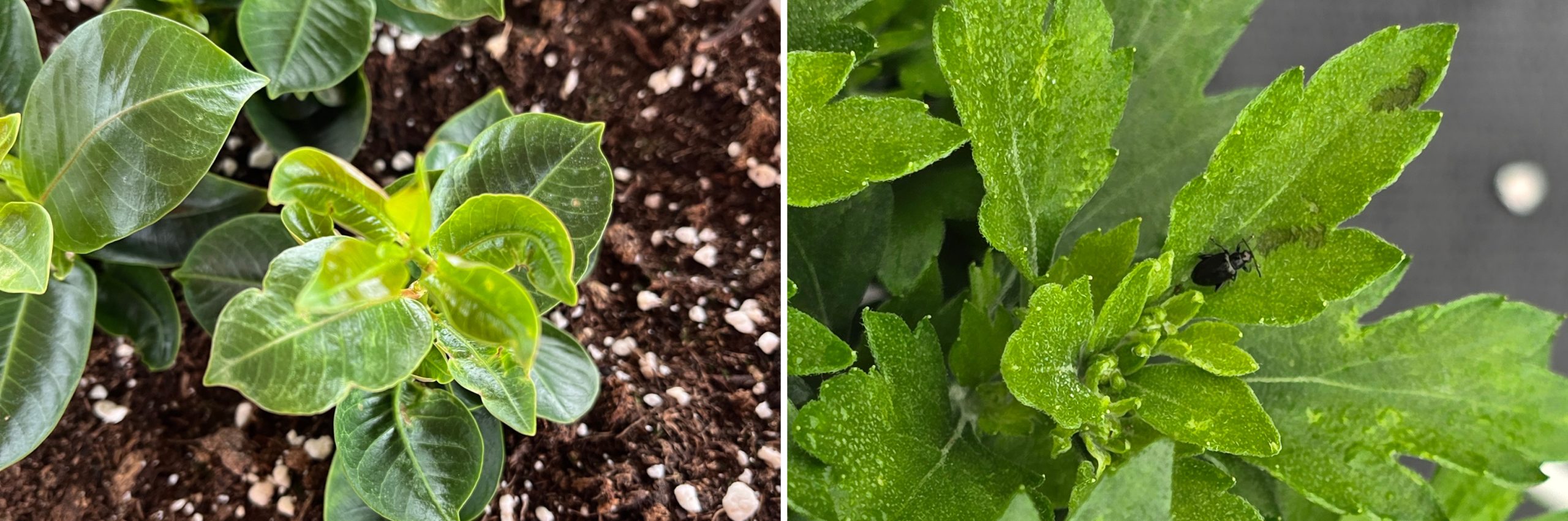
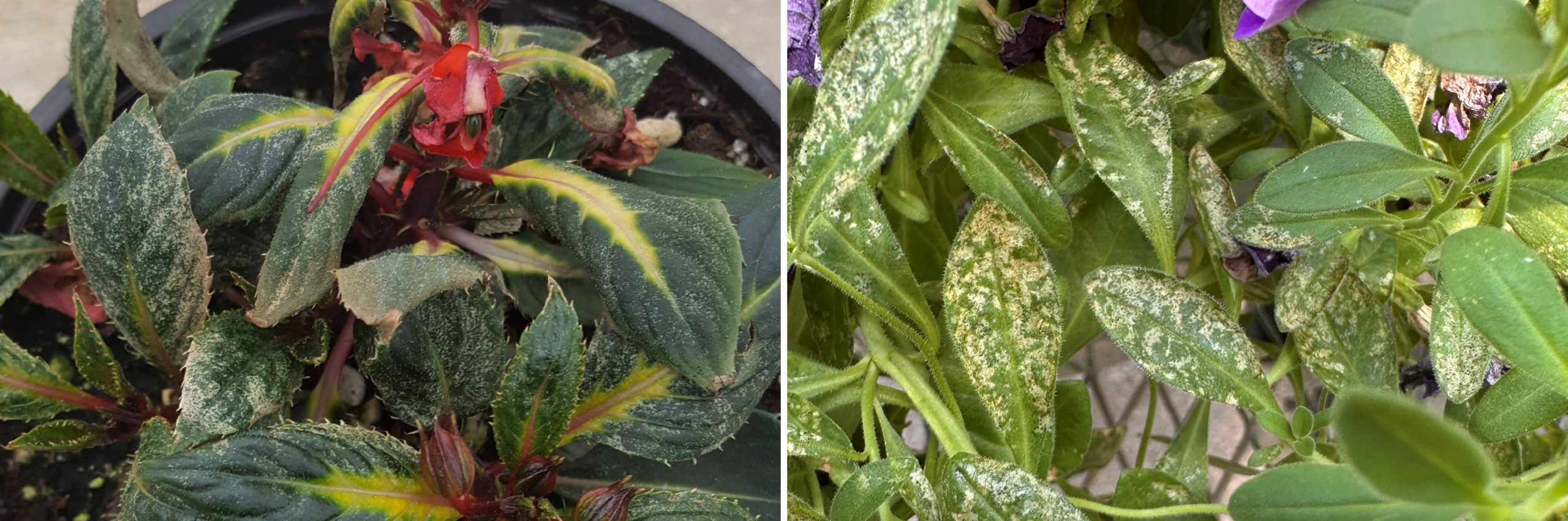
Vykenda was developed to address several of the most challenging pests in ornamental and transplant production. The label includes activity on several commercially important mite species (all life stages), thrips, flea beetles, black vine weevil adults, leafminers, Colorado potato beetles, Japanese beetles, psyllids, and other chewing insects. Preliminary feedback indicates that Vykenda could be an important tool in combating Pepper Thrips (Thrips parvispinus) as well – we look forward to seeing more controlled studies and grower feedback related to this difficult to control pest along with broad mites.
The product also provides activity on leaf-feeding caterpillars, but it is best used in rotation rather than as a primary control under heavy pressure.
In greenhouse systems where thrips and spider mites often occur together, Vykenda may offer particular value as a rotation partner with products such as spinosyns, diamides, or other established insecticide classes.
Application Considerations
From a safety standpoint, Vykenda fits well into greenhouse operations. The restricted entry interval (REI) is 12 hours, and the required personal protective equipment is relatively minimal, consisting of a long-sleeved shirt, long pants, shoes, and socks.
The product is designed strictly as a foliar spray and is compatible with common application equipment, including hydraulic sprayers, electrostatic sprayers, backpack sprayers, and hand wands. Greenhouse operations can also apply Vykenda through automatic cold fogging systems such as the Dramm AutoFog™ units, which can improve efficiency when treating large production areas. Reach out to GGSPro for assistance on calculating fog application rates.
Rates & Use Restrictions
Vykenda is a liquid-based suspension concentrate (SC) formulation coming in a 1-quart container. Rates vary depending on the target pest and application site. For example, mites are typically controlled with 4–8 floz per 100 gallons, while thrips and several chewing insects require higher rates in the 6–10.3 floz per 100 gallons range. The current Vykenda label allows a maximum of 5 floz per 100 gallons when treating outdoor areas. Applications must be spaced at least seven days apart, and the maximum labeled use rate per crop per year is 24.6 floz per acre. Resistance management guidelines also recommend avoiding more than two sequential applications before rotating to a different mode of action.
Crops & Vegetable Transplants
One unique aspect of the Vykenda label is its flexibility across production systems. In addition to ornamentals, the product is labeled for vegetable plants and other edible crops grown for retail sale, including vegetable transplants produced in greenhouse or nursery environments.
This includes crop groups such as brassicas, cucurbits, leafy greens, fruiting vegetables, and non-bearing fruit and nut trees produced for sale to consumers. For operations producing vegetable starts for garden centers, this greatly expands upon a limited insect and mite management toolbox.
Tank Mixing & Program Fit
Vykenda is generally considered compatible with many greenhouse inputs, including fungicides, insecticides, fertilizers, and microbial-based products. The label also notes that spray adjuvants may improve performance, particularly on waxy foliage or difficult-to-wet leaf surfaces.
It is highly recommended to pair compatible and dependable spray surfactants such as CapSil with Vykenda to improve spray coverage and leaf distribution. Adequate coverage on all leaf surfaces is imperative for adequate control as both thrips and mite species are great at hiding from pesticide applications. As with any tank mix, conducting a jar test and testing on a small group of plants before large-scale applications is recommended.
Pollinators & Biological Control Agents
Like many broad-spectrum insecticides, Vykenda can be toxic to bees if they are exposed to direct sprays or residues on blooming plants, so applications should be avoided during bloom or when pollinators are actively foraging.
Because the product is applied as a foliar spray and is not systemic, it is unlikely to impact soil-dwelling biological control organisms (e.g., Hypoaspis, Dalotia/Atheta, Beneficial Nematodes). However, above-ground beneficial insects and mites can be affected by direct sprays and residues. In practice, many programs recommend allowing four to six weeks before reintroducing beneficials after treatment. Reach out to GGSPro to see how Vykenda can fit into programs where BCAs are being used.
Registration Status
Vykenda received federal EPA registration in the United States in late 2025, allowing commercial introduction into ornamental production systems. As with most new chemistries, individual state approvals can take additional time. Sales teams continue to receive frequent questions about registration status, particularly in states with more complex regulatory processes. Currently, the most common inquiries involve New York, Massachusetts, and California, where regulatory reviews may take longer than in other states.
Be on the lookout for updates from your local Griffin representative or GGSPro regarding pending state registrations. A full list of current state registrations can be found here on the Syngenta Vykenda Webpage: Vykenda Insecticide | GreenCast | Syngenta
Bottom Line
Vykenda represents a vital new addition to the greenhouse and nursery pest management toolbox. With a novel IRAC Group 30 mode of action, strong activity on thrips and mites, and flexible application options, it offers growers another rotation partner for building sustainable management programs. As pest pressure increases and resistance continues to challenge existing chemistries, tools like Vykenda will play an important role in helping growers maintain effective control while protecting the longevity of their overall crop protection strategies.