Late spring and early summer are approaching, and with that comes some of the most troublesome pests affecting perennial and nursery growers. By learning the key stages of insect development and recognizing the types of damage they cause, growers can move from reacting to problems toward preventing them, ultimately saving both time and money.
Insect Identification & Management Options
Growers and scouts should look for clear signs that indicate which pest is present during routine scouting. Insects with piercing-sucking mouthparts typically cause discoloration, stippling, or streaking on foliage as they extract nutrients from plant tissue. In contrast, insects with chewing mouthparts leave more obvious physical damage, such as holes in leaves, notches along leaf edges, or injury to stems.
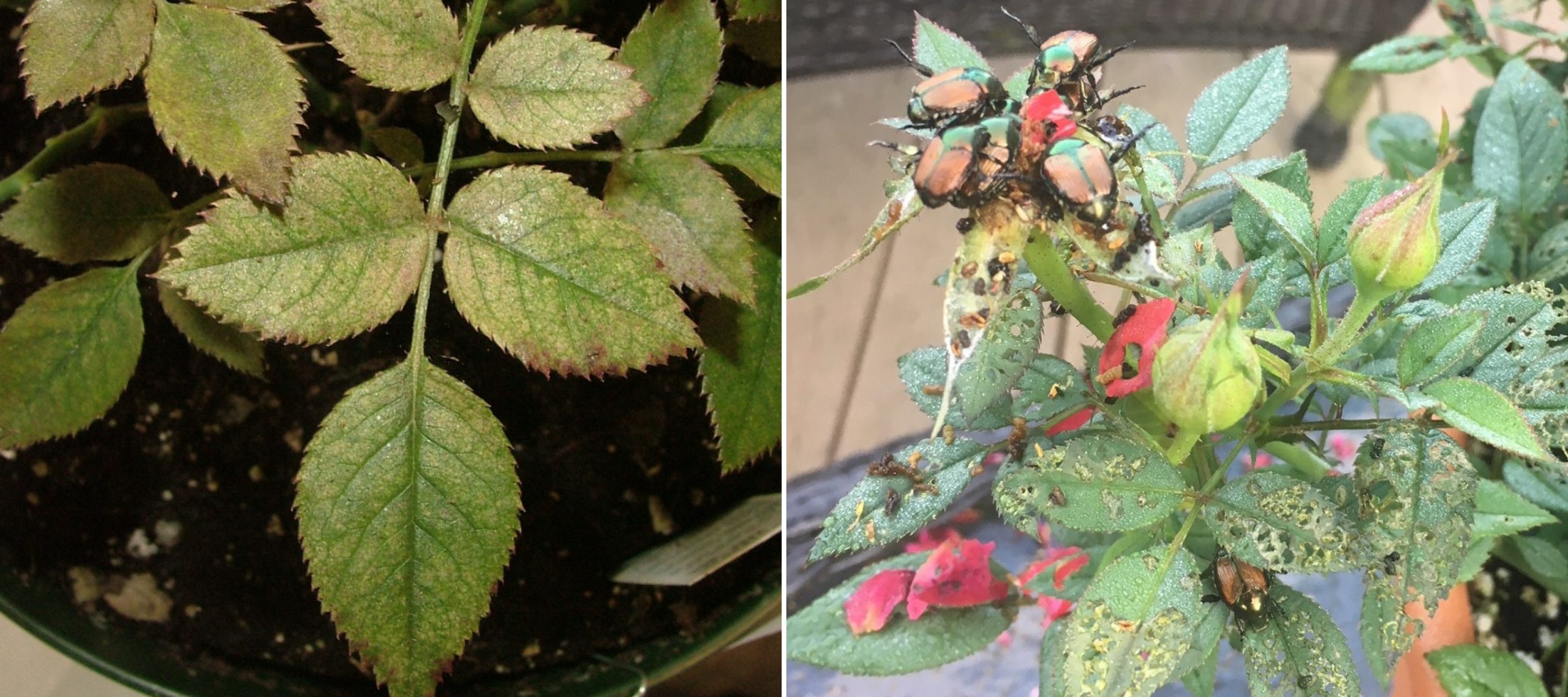
Stippling Damage from Spider Mites on Roses (Left); Beetle Chewing Damage on Roses (Right)
Signs of insect presence may be on stems/trunks for caterpillar or beetle borer activity or root systems for harboring insects like aphids, root mealybugs, and weevil grubs.
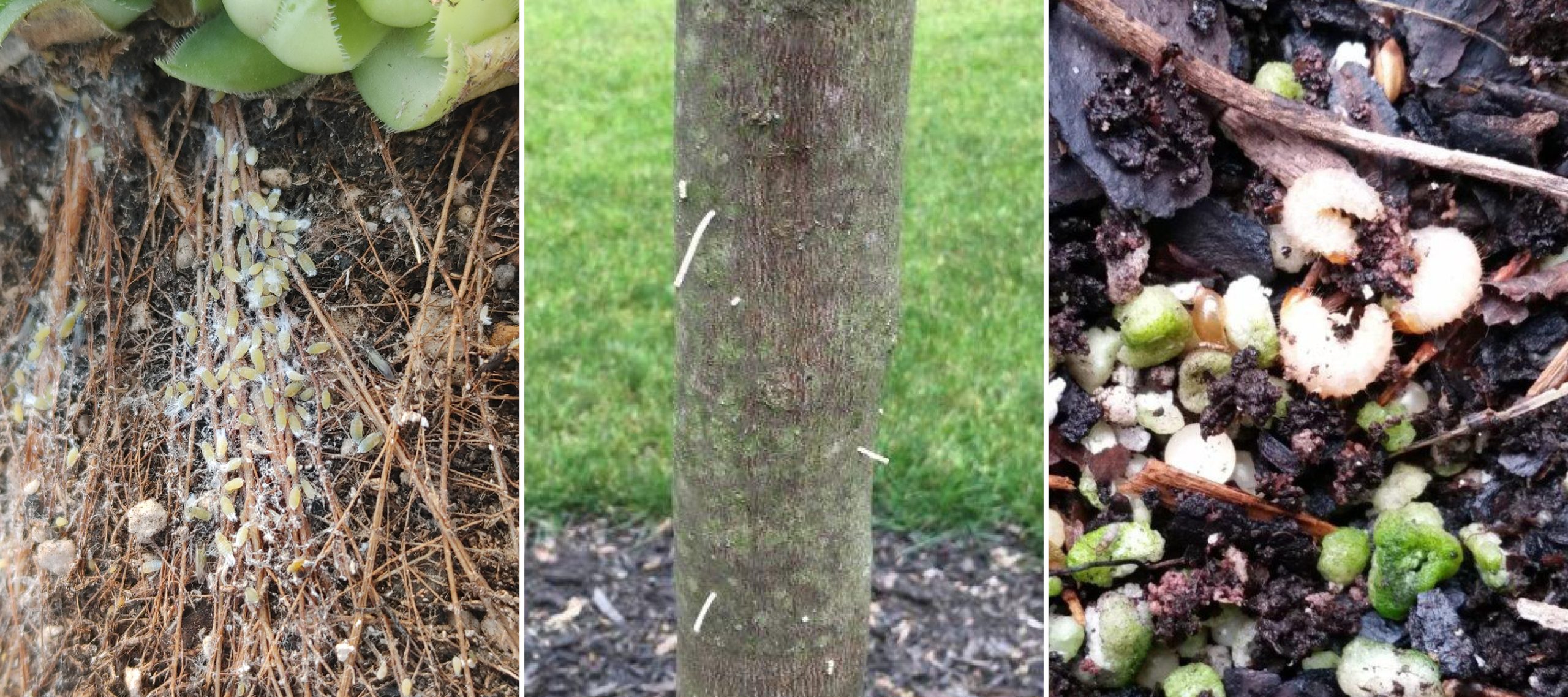
Root Aphids in Sedum (Left), Ambrosia Borer Frass Tubes (Middle), and Black Vine Weevil Larvae in Tiarella (Right)
Pests can have several generations over a given season, depending on location and climate, so targeting and gaining control over the first generation is most important. Repeating application intervals may be needed. The table below lists several key products for common insect pests found in the perennial and nursery settings. It is the grower’s responsibility to ensure that a product is properly registered in their state prior to use or purchase, with some states requiring special licensing.
| Common Name | Damage Characteristics | Chemical Control | Item No. |
|---|---|---|---|
| Aphids & Adelgids | Piercing/sucking mouthpart; curling, deformed, yellowing leaves | Altus Pradia TriStar | 70‑1161 70‑2630 70‑85221 |
| Beetles & Borers | Chewing mouthpart; holes or skeletonized leaves; bark beetles bore holes into bark, look for frass and/or sap | Mainspring Mainspring Xtra Sarisa | 70‑14091 70‑2333 70‑2975 |
| Bagworm | Chewing mouthpart. Recognized by the casing or bag that the caterpillar forms inside the canopy. Often looks like a pinecone | DiPel Pro DF BT NOW Conserve | 70‑1450 70‑1290 70‑1365 |
| Caterpillars & Moths | Chewing mouthparts; eat leaves, roots, and can bore into stems; wide host range | DiPel Pro DF XXpire Pradia | 70‑1450 70‑9700 70‑2630 |
| Grasshoppers | Chewing mouthparts; holes in foliage and flowers; increased pressure in dry weather | Acephate TriStar PyGanic Specialty | 71‑1105 70‑85221 70‑2687 |
| Lacebug | Piercing/sucking mouthpart. Yellow spots in the upper foliage. Feed underneath foliage. Look for dots of brown/black droppings protecting eggs | Altus Acelepryn Sarisa | 70‑11612 70‑1074 70‑2975 |
| Leafminers | Larvae of flies are laid inside leaf tissue and tunnel through the leaf in either a serpentine or blotch pattern | Avid Citation WSP Mainspring | 70‑1185 70‑13501 70‑2331 |
| Mealybugs | Piercing/sucking mouthpart. Yellowing, stunting of plant. Small oval-shaped white cottony masses on stems, leaves, or roots | Altus Pradia TriStar | 70‑11612 70‑2630 70‑85221 |
| Mites | Piercing/sucking mouthpart; chlorotic spots, whitish stippling; bronzed appearance. 4 pairs of legs, small oval or elongated body | Vykenda
Shuttle SuffOil‑X | 70‑9585 70‑30151 70‑4040 |
| Plant Bugs Plant Hoppers Leafhoppers Treehoppers | Piercing/sucking mouthpart; stippled, distorted foliage. Wedge-shaped insect with wings over the body, strong jumper, and come in various colors | Altus Pradia Mainspring | 70‑1161 70‑2630 70‑2331 |
| Rodents | Chewing mouthparts; girdle bark/stems, destroy roots, and create tunnels in media | Eaton’s Rodent Bait | E779PBM |
| Sawflies | Chewing mouthparts; larvae consume needles/leaves quickly, one branch at a time | Conserve Sarisa TriStar | 70‑1365 70‑2975 70‑85221 |
| Scale (soft/hard) | Piercing/sucking mouthpart; soft scale produces honeydew. Hard scale produces covers. Come in various colors and sizes | SuffOil‑X Talus TriStar | 70‑4040 70‑1172 70‑85221 |
| Weevils | Chewing mouthpart; chew distinctive notches along leaf margins; grubs injure roots/crowns | Flagship 25WG Mainspring Sarisa | 70‑1700 70‑2331 70‑2975 |
| Whitefly | Piercing/sucking mouthpart; yellowing foliage that drops. Adults are white with four wings, easily disturbed from foliage. Egg and crawler/pupae stages are found on the underside of leaves | Altus XXpire Sarisa | 70‑1161 70‑9700 70‑2975 |
Disease Identification & Management Options
The art and science of diagnosing plant diseases involve learning to distinguish abiotic from biotic characteristics. Learn to distinguish symptoms and location (e.g., flowers, leaves, stems, or roots) and look for specific signs of a pathogen present (e.g., conidia, pustules, mycelium, sporodochia, or ooze). With the diversity of perennial and woody plants prone to foliar pathogens, you often must wait until symptoms appear unless proactive controls are in place. Most pathogens require wet and warm conditions to occur, and treatment should be done prior to prevent damage. Cleaning up and removing damaged or fallen leaves and pruning diseased stems whenever possible are valuable cultural strategies for decreasing disease incidence. Increasing the air flow around crops allows foliage to dry more quickly, reducing the spread of the disease. Matching the correct environmental growing conditions to the crop and following recommended watering and fertilization practices will reduce the impact of plant diseases.
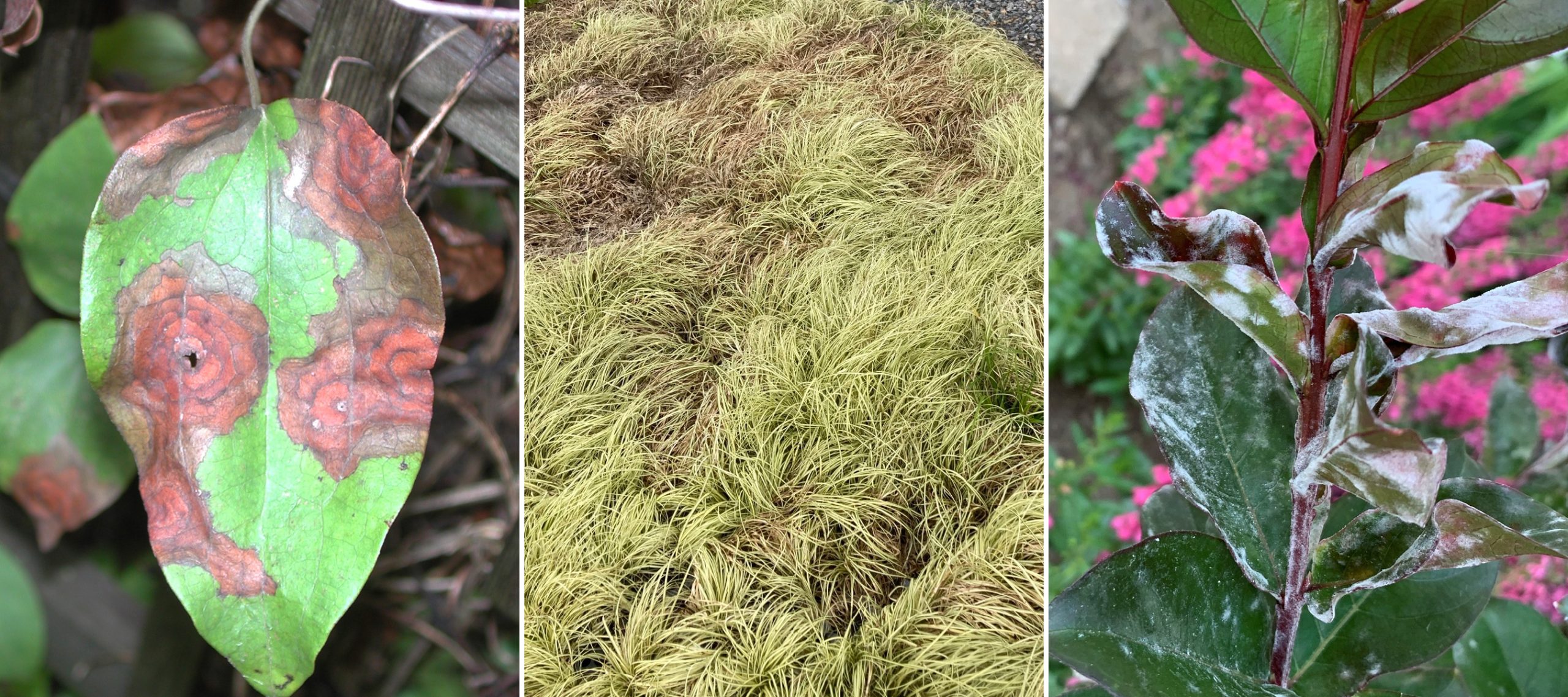
Ascochyta Blight on Clematis (Left), Rhizoctonia Web Blight on Carex (Middle), and Powdery Mildew on Crepe Myrtle (Right)
Root pathogens are generally difficult to confirm without microscopic examination, allowing you to look for zoospores, oospores, mycelium, and chlamydospores. Ideally, plants should have clean, white-looking roots, not dirty-looking, brown or black streaks or exposed root tips. When possible, grow resistant varieties, scout regularly, and keep good records to identify problematic areas/crops and to inform proactive chemical applications. Avoid heavy or frequently saturated soil conditions unless the crops require these environments. Drenching rates may vary depending on crops and be labeled for specific diseases. Preventative biological fungicides work well when applied at transplanting as a soil drench or pre-incorporated into the mix prior to planting.
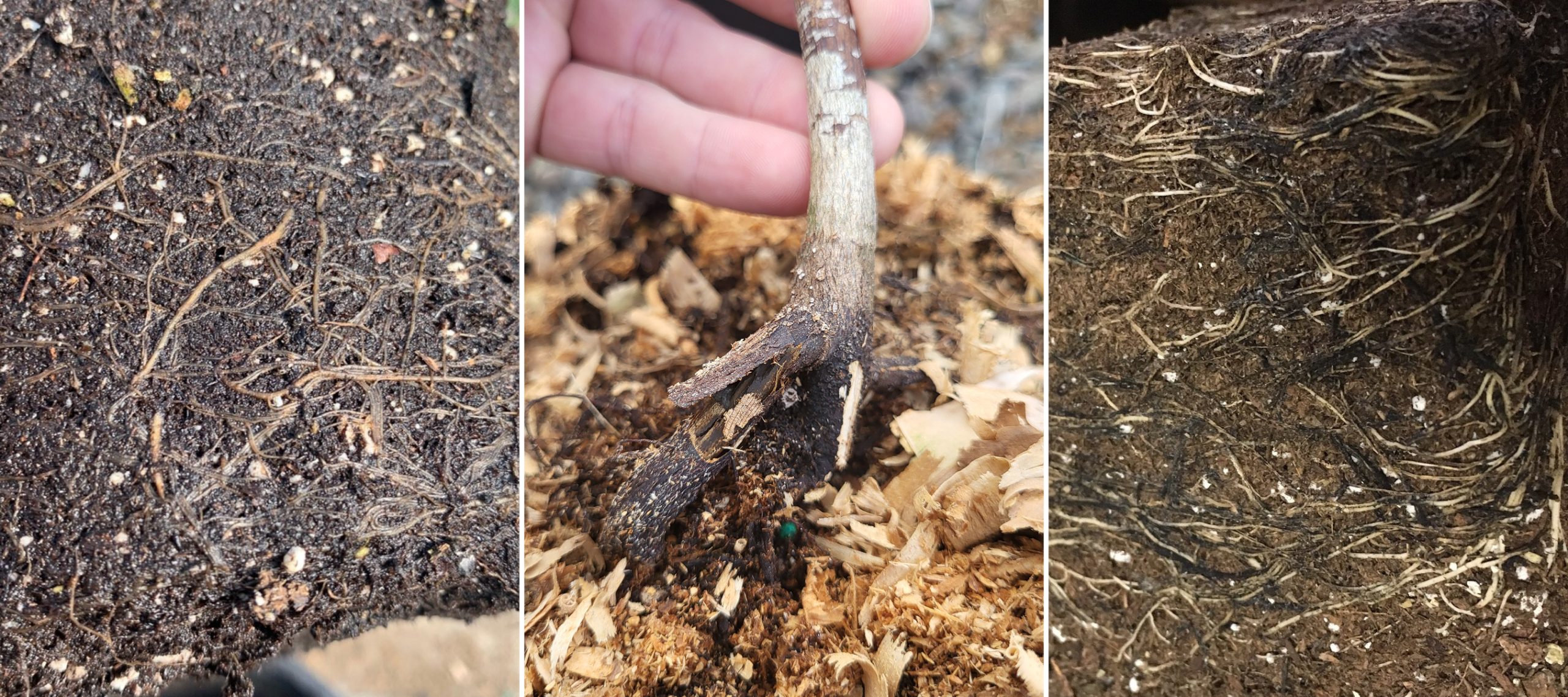
Pythium Root Rot (Left), Phytophthora Root Rot (Middle), and Thielaviopsis Root Rot (Right)
| Common Name | Damage Characteristics | Chemical Control | Item No. |
|---|---|---|---|
| Bacterial | Dark, water-soaked, brown to black greasy spots with or without a yellow border; oozing is observable when wet | Nordox Phyton 35 Postiva | 71‑1700 71‑2732 71‑2400 |
| Blights | Sudden yellowing, brown or black foliage, stem/tip dieback, Shepards hooks, cankers, chlorosis | Concert II Mural Palladium | 71‑1365 71‑1690 71‑2685 |
| Downy Mildew | Upper leaves yellow, brown, and curl. Undersides leaves with spores white, tan to purplish gray | Fenstop Micora Segovis | 71‑14800 71‑1655 71‑3100 |
| Fusarium | One side of plant yellows and collapses, stems turn brown/straw color, and orange/white mycelium forms | 3336 F Mural Postiva | 71‑2585 71‑1690 71‑2400 |
| Leaf Spots | Various spots/lesions, may have dark borders, tan centers with pycnidia inside, and develop concentric rings | Affirm Avelyo Postiva | 71‑1131 71‑1195 71‑2400 |
| Needlecast | Needles turn yellow to light brown in late summer/fall | Banner Maxx Concert II Spectro 90 | 71‑2972 71‑1365 71‑2755 |
| Nematodes (Foliar & Root) | Patchy, blotched, banded appearance, bounded by veins. Stunting, yellowing, galls/nodules on roots | Azatin O Broadform Trefinti | 70‑12301 71‑12901 71‑3032 |
| Powdery Mildew | White cotton mycelium on the upper or lower leaf surface, purple-gray or brown necrotic areas | Affirm Palladium Seido | 71‑1131 71‑2685 71‑1320 |
| Pythium | Yellowing, wilting foliage. Roots with a “rat-tail” appearance, sloughing off, leaving exposed root tip | Banrot Fenstop Segway O | 71‑1210 71‑14800 71‑31102 |
| Phytophthora (Aerial & Root) | Water-soaked lesion moves from the stem/soil line in towards the petioles; wilting, off-color | Aliette Segway O Segovis | 71‑11352 71‑31102 71‑3100 |
| Rhizoctonia (Aerial & Root) | White mycelium growing over collapsed foliage. Dry brown canker at the soil line, roots brown, dry, and brittle | Avelyo 3336 Medallion | 71‑1195 71‑2585 71‑16502 |
| Rust | Bright orange spores/blisters appear on leaves/needles, often on the underside of foliage | Avelyo Nordox Spectro 90 | 71‑1195 71‑1700 71‑2755 |
| Thielaviopsis | Foliage may resemble iron deficiency. Roots have black streaks or root tips | Avelyo 3336 F Medallion | 71‑1195 71‑2585 71‑16502 |
Investing in clean plant material and keeping weeds under control helps protect your time and resources. Weeds can harbor insects and diseases, so reducing them lowers risk early. Good sanitation also matters. Clean equipment between uses, keep boots and hand tools free of debris, and limit movement between production areas when possible. Taking these preventative steps sets the foundation for a successful season, but you don’t have to manage it alone. As an active Griffin customer, you can contact GGSPro at ggsprotech@griffinmail.com or 1-800-888-0054 ext. 89129 for support in building and refining a pest management program tailored to your operation.