Lessons We’ve Learned Working with Garden Mum Growers Across the Country
Every summer, our GGSPro team works with commercial growers across the country producing fall garden mums. Some operations are using similar genetics, fertilizers, growing media, and crop protection products, yet by September finished crops can look completely different. One field is full of perfectly rounded plants covered in blooms, while another struggles with uneven growth, yellow foliage, premature budding, or plants that simply never reached their potential.
After years of supporting growers through these production cycles, one thing has become clear: the difference is rarely one catastrophic mistake. Instead, it’s usually a series of small management decisions that either build momentum or slowly steal quality from the crop. The operations that consistently produce exceptional mums aren’t necessarily better at fixing problems. They’re better at preventing them..
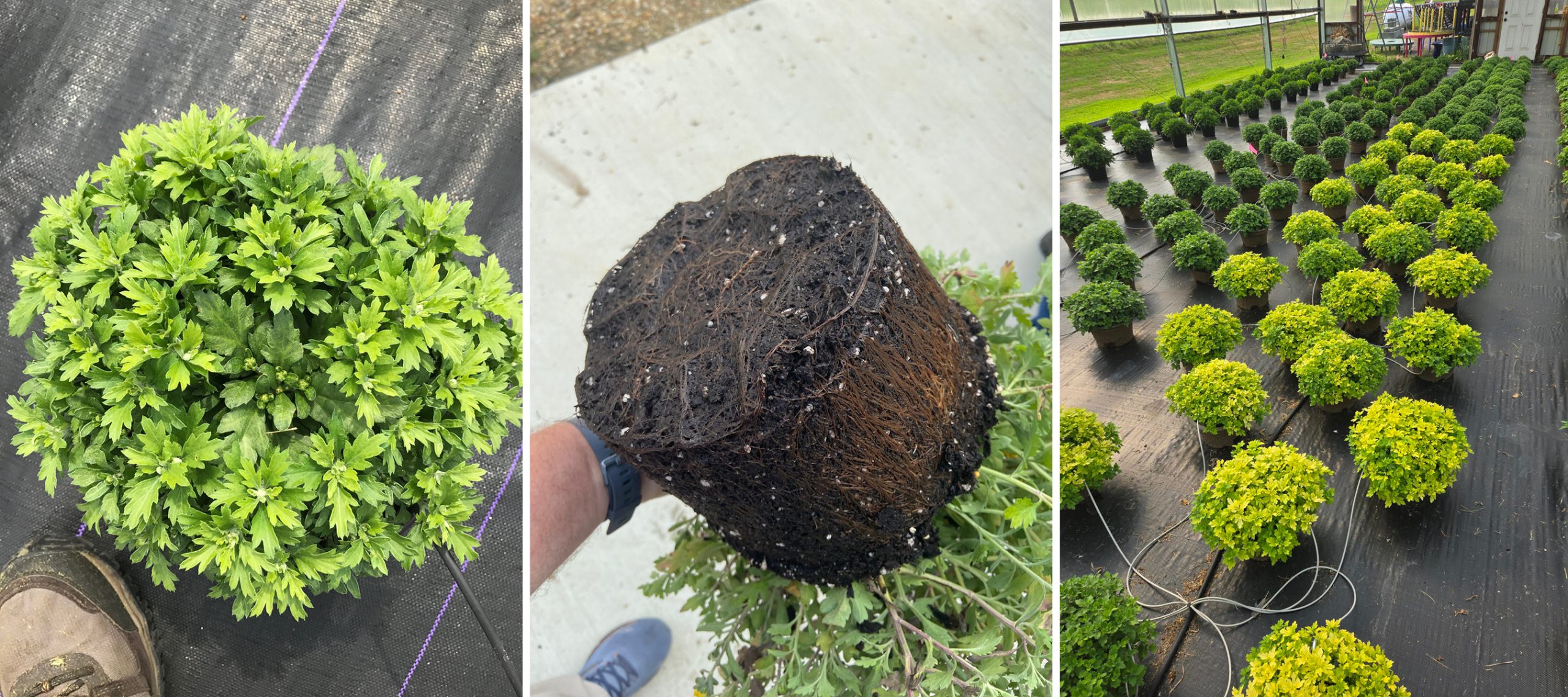
Overcoming crown budding with high fertility (left)
Pythium root rot (center)
Indicator mum variety exhibiting iron deficiency before adjacent varieties (right)
One pattern we’ve observed while working with growers across the country is that many people focus on the last few weeks before sale. They worry about bloom timing, height, color, and final presentation. While those factors certainly matter, the reality is that much of the crop’s success was determined long before the first flower bud appeared.
The first two to three weeks after transplant are arguably the most important period in the entire production cycle. This is when the plant establishes its root system, develops its branching potential, and builds the framework that ultimately determines finished size and quality. If growth stalls during this period, the crop often spends the remainder of the season trying to recover or “catch up” rather than progressing toward sale.
For that reason, fertility should be viewed as a growth strategy instead of simply a feeding program. Whether utilizing controlled-release fertilizer (CRF), water-soluble fertilizer (WSF), or a combination of both (“50-50 Program”), the objective is to encourage vigorous vegetative growth immediately after transplant. Growers sometimes assume that incorporating a CRF means the crop is “fed”, but controlled-release products alone cannot always satisfy the heavy nutritional demand during establishment. Early applications of water-soluble fertilizer provide readily available nutrition that drives the soft, vigorous growth needed for maximum branching. Another pattern we repeatedly encounter is growers chasing nutrient deficiencies after they become visible instead of identifying the underlying cause.
Iron (Fe) deficiency is an excellent example of a small crack in the hull leading to a major leak in the boat. The first symptoms often appear as bright yellow new growth while the veins remain green, frequently in only a few sensitive varieties. It’s easy to conclude that the crop simply needs iron, but more often, the plant is telling you that media pH has drifted above the ideal range of 5.4 to 5.8, reducing iron availability. The first yellow plants should be viewed as an early warning system, not an isolated problem. Correcting the pH early and frequently restores crop growth uniformity before the issue spreads throughout the field. Chelated iron drenches can be excellent tools when needed, but maintaining proper substrate pH remains the long-term solution.
Magnesium (Mg) deserves similar attention. Garden mums have a relatively high demand for magnesium, and deficiencies commonly appear as interveinal chlorosis on older leaves. Supplemental Epsom salts (magnesium sulfate) or fertilizer programs containing additional magnesium sources such as “cal-mags” can often prevent these issues before they become significant. Small nutritional adjustments made early are almost always easier than correcting deficiencies late in production when crop quality has been compromised.
One lesson that surprises many growers is that a heavy-feeding crop can still be damaged by over-concentrated fertilizer salts. Some of the worst root systems we encounter are not the result of insufficient fertilizer but rather fertilizer applied to excessively dry media. When the growing media dries out, salts become concentrated around the root system, creating physiological drought and root injury. The resulting symptoms are often mistaken for disease or nutrient deficiency, leading to unnecessary pesticide or fertilizer applications. A simple rule can prevent many of these problems: fertilize moist media, not thirsty roots.
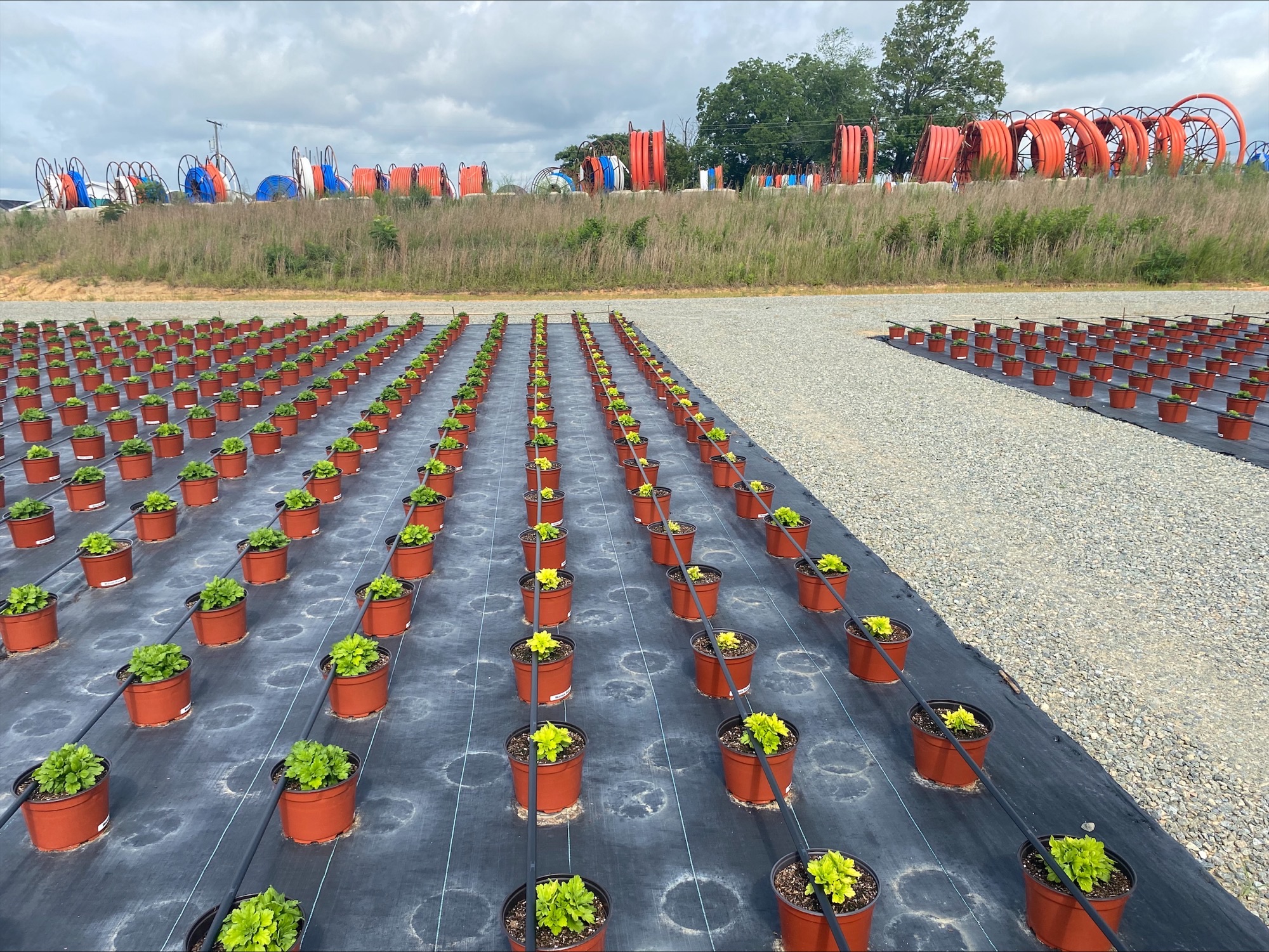
Variation in iron deficiency symptoms among garden mum varieties
Weather also has a tremendous influence on fertility management. Throughout much of the country, summer rainfall can rapidly leach nutrients from containers. Working with growers across the country, we’ve found that those utilizing CRF often benefit from a built-in nutritional safety net following heavy rain events. Conversely, growers relying solely on WSF should restore fertility promptly after excessive rainfall rather than waiting for the next normal irrigation cycle. Lost fertility during active vegetative growth can translate directly into lost plant size at finish.
Modern genetics have also changed the way we think about premature crown budding. While today’s varieties offer outstanding branching and flower quality, some are more responsive to environmental conditions than older cultivars. Moderate temperatures, shortening day lengths, water stress, or low fertility can all encourage plants to transition into reproductive growth before sufficient vegetative growth has developed. By the time crown buds are obvious across the crop, valuable growth has already been lost. The growers who consistently produce exceptional mums tend to identify these issues early through routine scouting. When detected promptly, increasing fertility and, when appropriate within the production schedule, utilizing Florel (Ethephon) correctly can encourage vegetative growth to push beyond premature buds. Waiting another week often makes recovery considerably more difficult.
Finally, one pattern stands above all others. Successful mum production is rarely about finding the perfect fertilizer, fungicide, insecticide, or plant growth regulator. Those products are valuable tools, but they perform best when supported by strong cultural practices. Healthy roots, proper media pH, balanced fertility, adequate moisture management, and consistent scouting create resilient plants that are far less likely to require rescue treatments later in the season.
The best-looking mum crops each fall are not built by one great decision. They are built by hundreds of good ones. Working with growers across the country has reinforced the same lesson year after year: success doesn’t come from chasing problems after they appear. It comes from building a crop that never gives those problems the opportunity to develop.
| Item No. | Description |
|---|---|
| 33605 | Jack’s 22-5-16 Mum FeED 25lb |
| 33615 | Jack’s 20-10-20 Peat Lite 25lb |
| 33627 | Jack’s Dark Weather Peat Lite 15-0-15 25lb |
| 67-2368 | Peters 22-5-16 Mum Special w/Black Iron 25lb |
| 33612 | Peters 20-20-20 General Purpose 25lb |
| 67-2305 | Peters 15-5-15 Cal-Mag Special w/Black Iron 25lb |
| 31-140200 | Plantex 20-10-20 All Purpose Hi Nitrate 25lb |
| 31-140100 | Plantex 15-0-15 Cal-Plus 25lb |
Controlled-Release Fertilizer (CRF)
| Item No. | Description |
|---|---|
| 67-1530 | Osmocote Plus 15-9-12 (5-6M) – NE 50lb |
| 67-1540 | Osmocote Plus 15-9-12 (8-9M) – SE 50lb |
| 33-12411140 | Florikan 12-4-11 (140D) – NE 50lb |
| 33-124111CFR | Florikan 12-4-11 (180D) – SE 50lb |
Misc. Supplements
| Item No. | Description |
|---|---|
| 14MGSUL | Epsom Salts, Magnesium Sulfate 50lb |
| 67-12906 | Plantex Iron DTPA 5lb |
| 67-12905 | Plantex Iron EDDHA 5lb |
| 67-2366 | S.T.E.M. Micronutrient Package 2.64gal |
| J74394 | M.O.S.T. Micronutrient Package 1lb |
Note, not all products are registered in all states. Some pesticides are restricted use in some states or regions and not others. It is the responsibility of the applicator to read and follow all label directions, remembering that labels may change. Other products may be safe and effective. Rates, application methods, and edible status are detailed in our GGSPro Insecticide & Fungicide Guides. Griffin also offers the 6th Edition GGSPro Technical Reference Guide. This valuable resource outlines a wide range of pest control options and information on pollinator safety, BCA’s, scouting, weed management, plant lighting, nutrition, water quality and more!